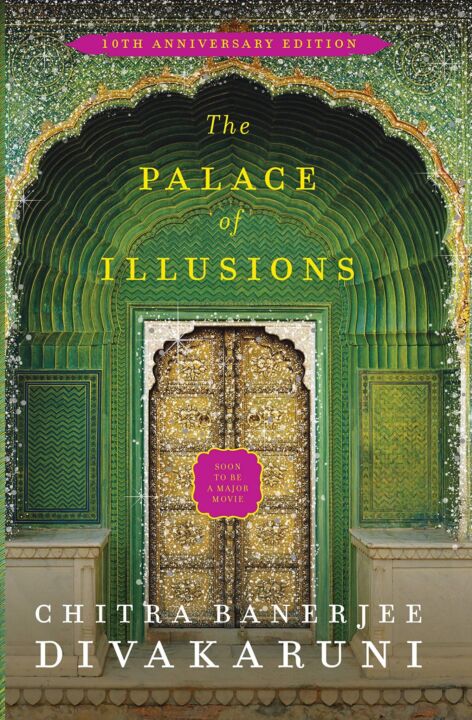
Title: The Palace of Illusions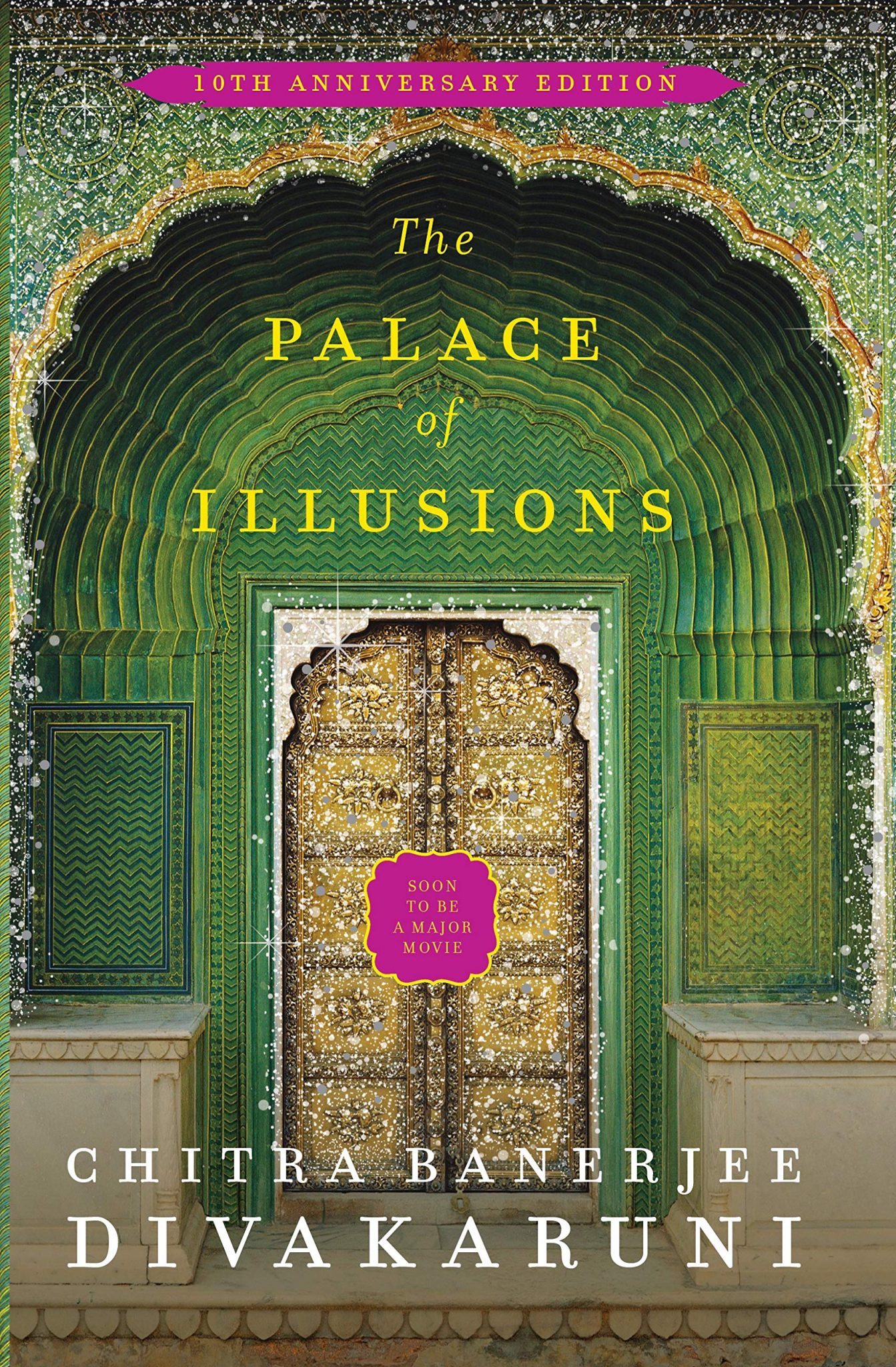
Author: Chitra Banerjee Divakaruni
Publisher: Pan Macmillan India
Genre: Mythology Fiction
First Publication: 2008
Language: English
Major Characters: Panchaali, Arjun, Yudhishthir, Bhim, Krishna, Duryodhan, Karna, Dhristadhyumna, Drauna, Bhishma
Setting Place: Ancient India
Narration: First Person (Draupadi’s Point of view)
Book Summary: The Palace of Illusions
A reimagining of the world-famous Indian epic, the Mahabharat—told from the point of view of an amazing woman.
Relevant to today’s war-torn world, The Palace of Illusions takes us back to a time that is half history, half myth, and wholly magical. Narrated by Panchaali, the wife of the legendary Pandavas brothers in the Mahabharat, the novel gives us a new interpretation of this ancient tale.
The novel traces the princess Panchaali’s life, beginning with her birth in fire and following her spirited balancing act as a woman with five husbands who have been cheated out of their father’s kingdom. Panchaali is swept into their quest to reclaim their birthright, remaining at their side through years of exile and a terrible civil war involving all the important kings of India. Meanwhile, we never lose sight of her strategic duels with her mother-in-law, her complicated friendship with the enigmatic Krishna, or her secret attraction to the mysterious man who is her husbands’ most dangerous enemy. Panchaali is a fiery female redefining for us a world of warriors, gods, and the ever-manipulating hands of fate.

Book Review: The Palace of Illusions
The Palace of Illusion by Chitra Banerjee Divakaruni is a re-telling of the Indian epic, the Mahabarat, from the perspective of Draupadi. It is rich and wonderful story-weaving. By one of my long-time favorite authors, Chitra Banerjee Divakaruni, it is completely satisfying and at the same time educational.
I was entranced from the first page to the last, and loved the very human faces put on the feats of the heroes and gods in the story. Especially Panchaali, the heroine, will stick in my mind as a faulty yet lovable woman, mistaken in much, but struggling always to find truth and love. Krishna, too, in his many-faceted character, shines as an eternal presence, only revealed in the end for his true identity.
Panchaali enters this world through a holy fire, an unwanted boon granted by the gods in addition to her brother, Dhristadhyumna, the child destined to kill their father’s greatest enemy, Drauna. She marries the five Pandava brothers, the eldest of whom, Yudhisthir, bets and loses his kingdom to their cousins, Kauravas. After twelve years of exile in the forest, the cousin refuses to return the kingdom, and the Pandavas go to war against the Kauravas. It is a story so epic that it has an epic name: the Mahabharata.
The Palace of Illusions is no substitute for the real Mahabharata, of course, but it’s a good place to start. Chitra Banerjee Divakaruni has taken one of the fundamental pieces of Indian literature and focused on the story of Panchaali. Narrating the events from Panchaali’s perspective, author explores Panchaali’s role in the conflict between the Pandavas and the Kauravas. The result is a moving tale of human tragedy which, according to author, gives us insight into a character who is significant in the Mahabharata but largely silent on her motives, thoughts, and feelings.
Since Author Chitra embraces her first person narrator, the epic scope of the source material suddenly becomes more personal. This in turn leads to a good question: can one really distill the essence of something as long and convoluted as the Mahabharata in less than four hundred pages? Having not read the Mahabharata, I can’t say for certain; however, I’m sure the answer is “no.” One of the reasons mythology is beautiful is its enduring but flexible nature as a source material.
I can’t attest to how well The Palace of Illusions upholds the legacy of the Mahabharata. Regardless, it is a beautifully-written, moving story about Panchaali, the Pandavas, and the Kauravas. At times it doesn’t go as deep into Panchaali’s life as I would expect of a story narrated by and about her. But that’s a minor quibble compared to the tragic story, one of personal and epic scope, unfolded against the landscape of an India where magic is commonplace and gods walk among us.







